


Why doesn’t the Modigliani-Miller theorem apply to the relationship between endowments (“firms”) and donors (“shareholders”), rendering an endowment’s investment policy neutral? We show that donor altruism (even if impure) breaks neutrality. Under a condition—which quickly converges to standard DARA preferences in the number of donors—endowment risk-taking reduces donor free-riding, is Pareto improving, and required by endowment competition. Contrary to asset-liability matching, large endowments optimally take substantial risk even if donors are very averse to changes in endowment-supported spending, reversing the standard moral hazard interpretation. Total giving grows unbounded in the number of donors even with pure altruism.
Kent Smetters
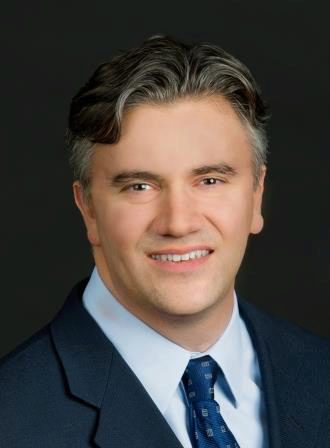
- Boettner Professor
- Professor of Business Economics and Public Policy
Contact Information
- Primary Email:
smetters@wharton.upenn.edu - Primary Email:
smetters@wharton.upenn.edu - Office Phone:
(215) 898-9811
- office Address:
325 Dinan Hall (formerly Vance Hall)
3733 Spruce Street
Philadelphia, PA 19104
Research Interests: applied theory, finance, public economics, insurance, health care
Links: CV
Overview
Kent Smetters is the Boettner Chair Professor at the University of Pennsylvania’s Wharton School and a Faculty Research Fellow at the National Bureau of Economic Research. Besides being a professor in Business Economics and Public Policy, he is also professor of Insurance and Risk Management as well as a faculty member in Applied Mathematics and Computational Science at Penn. His research focuses on applied theory, fiscal policy, risk measurement, insurance, health care, and personal finance. Previous policy positions include the Congressional Budget Office (1995 to 1998) as well as Deputy Assistant Secretary (Economic Policy) for the United States Treasury (2001-2002). He and his coauthor recently won the 2016 TIAA Paul A. Samuelson Award for their study on annuitization. He is the host of “Your Money,” a weekly personal finance radio show on SiriusXM 111 (Business Radio) as well as a monthly contributor to the Wall Street Journal. He occasionally provides support on meaningful legal cases related to medical malpractice, ERISA, insurance, financial advice and securities offerings. Kent Smetters received his PhD in Economics from Harvard University.
Research
- Alex Muermann and Kent Smetters (Working), Optimal Endowment Investing. Abstract
- Florian Scheuer and Kent Smetters (2014), Could a Website Really Have Doomed the Health Exchanges? Multiple Equilibria, Initial Conditions and the Construction of the Fine (American Economic Journal), American Economic Journal: Economic Policy, 10 (4), pp. 302-343. Abstract
We document that states that experienced website glitches in the ACA’s first year faced higher average costs that persisted into future years. These dynamics are inconsistent with the standard strategic-pricing model, which requires non-localized common knowledge about market conditions but are consistent with price-taking. Initial conditions can have a permanent effect—including convergence to a Pareto-dominated, stable equilibrium—under conditions that we show are plausible in this setting. Changing the fine from a fixed amount to a fraction of equilibrium prices increases the likelihood of reaching a Pareto-efficient equilibrium without increasing the equilibrium fine collected.
- Kent Smetters and Xingtan Zhang (Working), A Sharper Ratio. Abstract
While the Sharpe ratio is still the dominant measure for ranking risky investments, much effort
has been made over the past three decades to find more robust measures that accommodate non-
Normal risks (e.g., “fat tails”). But these measures have failed to map to the actual investor problem
except under strong restrictions; numerous ad-hoc measures have arisen to fill the void. We derive
a generalized ranking measure that correctly ranks risks relative to the original investor problem
for a broad utility-and-probability space. Like the Sharpe ratio, the generalized measure maintains
wealth separation for the broad HARA utility class. The generalized measure can also correctly
rank risks following different probability distributions, making it a foundation for multi-asset class
optimization. This paper also explores the theoretical foundations of risk ranking, including proving
a key impossibility theorem: any ranking measure that is valid for non-Normal distributions cannot
generically be free from investor preferences. Finally, we show that approximation measures, which
have sometimes been used in the past, fail to closely approximate the generalized ratio, even if those
approximations are extended to an infinite number of higher moments. - Daniel Gottlieb and Kent Smetters (Under Review), Lapse-Based Insurance (Revise and Resubmit, American Economic Review). Abstract
Life insurance is a large yet poorly understood industry. Most policies lapse before they expire.
Insurers make money on customers that lapse their policies and lose money on those that keep
their coverage. Policy loads are inverted relative to the dynamic pattern consistent with insurance
against reclassification risk. As an industry, insurers lobby to ban secondary markets despite the
liquidity provided. We propose and test a simple model in which consumers do not fully account
for uncorrelated background risks when purchasing insurance. In equilibrium, insurers “front load”
their pricing to magnify lapsing, a result that is robust to various market structures. The comparative
statics from the model contrast with the ones from insurance against reclassification risk, hyperbolic
discounting, or fixed costs, and are consistent with the data. - Daniel Gottlieb and Kent Smetters (Under Review), Grade Non-Disclosure. Abstract
This paper documents and explains the existence of grade non-disclosure policies
in Masters in Business Administration programs, why these policies are concentrated
in highly-ranked programs, and why these policies are not prevalent in most other
professional degree programs. Related policies, including the existence of honors and
minimum grade requirements, are also consistent with our model. - Julia Li and Kent Smetters (Working), Optimal Portfolio Choice with Wage-Indexed Social Security.
- Shinichi Nishiyama and Kent Smetters (Working), Richardian Equivalence Under Asymmetric Information. Abstract
Several empirical studies have found that extended household units do not appear to be highly altruistically linked, thereby violating the very premise of the Ricardian Equivalence Hypothesis (REH). This finding has a very strong implication for the effectiveness of fiscal policies that change the allocation of resources between generations. We build a two-sided altruistic-linkage model in which private transfers are made in the presence of two types of shocks: an “observable” shock that is public information (for example, a public redistribution like debt or pay-as-you-go social security) and an “unobservable” shock that is private information (for example, individual wage innovations). Parents and children observe each other’s total income but not each other’s effort level. In the second-best solution, unobservable shocks are only partially shared, whereas, for any utility function satisfying a condition derived herein, observable shocks are fully shared. The model, therefore, can generate the low degree of risk sharing found in previous empirical studies, but REH still holds.
Teaching
Past Courses
AMCS5999 - Independent Study
Independent Study allows students to pursue academic interests not available in regularly offered courses. Students must consult with their academic advisor to formulate a project directly related to the student’s research interests. All independent study courses are subject to the approval of the AMCS Graduate Group Chair.
AMCS9950 - Dissertation
Allows for a PhD student to be enrolled full-time to work exclusively on research, writing and preparing his/her doctoral thesis and defense. All required coursework (20 CUs) must be completed, and the student must have passed his/her thesis proposal/oral candidacy examination prior to being enrolled.
AMCS9990 - Masters Thesis
For students writing a Master's Thesis to fulfill the program's requirements. All required coursework (8 CUs) must be completed prior to being enrolled.
AMCS9999 - Ind Study & Research
Study under the direction of a faculty member.
BEPP6110 - Microeconomics for Managers
This course covers microeconomic foundations for understanding business decision-making. The first unit, “Operating a Firm,” covers demand estimation, cost minimization, and pricing with market power. Unit two, “Markets and Equilibrium,” covers supply and demand, market equilibrium, taxes and tax incidence, and externalities. Unit three presents an introduction to game theory, including simultaneous-move and sequential games. Students are expected to have mastered these materials before enrolling in the second-quarter course, Microeconomics for Managers: Advanced Applications.
BEPP6120 - Microeconomics for Mgrs Advanc
This course will cover the economic foundations of business strategy and decision-making in market environments with other strategic actors and less than full information, as well as advanced pricing strategies. Topics include oligopoly models of market competition, creation, and protection, sophisticated pricing strategies for consumers with different valuations or consumers who buy multiple units (e.g. price discrimination, bundling, two-part tariffs), strategies for managing risk and making decisions under uncertainty, asymmetric information and its consequences for markets, and finally moral hazard and principle-agent theory with application to incentive contacts.
BEPP6130 - Business Analytics
This 0.5 CU course merges the instruction offered in Managerial Economics with data to flesh out related concepts with practical business applications. The purpose of the course is to close the gap between the theory of business analytics and its actual practice, i.e., how you can really use it in your practice. More than ever, there is a need for business leaders to become more data literate: “Business leaders at every level need to become data literate and be able to understand data and analytical concepts that may have previously seemed out of reach, including statistical methods, machine learning, and data manipulation. With this spread of data literacy comes the powerful ability to make educated business decisions that rely on the smart use of data, rather than on an individual’s opinions. In the past, these tasks were extremely complex and would be handed off to engineers. With the tools that exist today, business leaders are able to dive into their own analytics and uncover powerful insights.” (Microsoft) You will learn how to conduct in-depth business analytics based on sensible economics reasoning. As the main project, you will build an end-to-end business workflow. The problem and data can come from a current employer, from your own startup idea, or, from the instructor to represent a hypothetical setting. In the tradition of MGEC, the course will also motivate future electives to refine components of your analysis. Ultimately, you will walk away from the course with a fuller understanding of how different business and economics concepts “fit together” to answer big, relevant questions. Your new skillset is repeatable for your future projects. You will also learn key ideas that allow you to work with future coding teams in your future work, thereby closing the language gap between business economic goals and coding implementation. Normally, this type of comprehensive problem solving would require using coding languages like Python or R. However, the instructor for this course has developed a no-code toolbox that can be used with Microsoft Excel that allows for end-to-end analytics, making data analytics accessible to a much wider audience. This software will be provided for free to you.
BEPP8930 - Adv Study Project
“This course closes the gap between the theory of business economics analytics and its actual practice, i.e., how you can really use it in your practice. Normally, this type of comprehensive problem solving would require using coding languages like Python or R. However, the instructor for this course has developed a plugin no-code toolbox for Microsoft Excel that allows for end-to-end analytics, making data analytics accessible to a much wider audience. This software plugin will be provided for free to you. You will learn how to conduct in-depth business analytics based on sensible economics reasoning within Excel. The hands-on experience does not require in-depth software coding, and your new skillset is repeatable for your future projects.”
BEPP8970 - Special Topics
Course titles and descriptions for Special Topics courses can be found in Path@Penn for the term in which they are offered. See "SECTION DETAILS" in Path@Penn for the course description and use the Syllabi@Wharton app to see the course syllabus.
BEPP9950 - Dissertation
Dissertation
ECON4999 - Independent Study
Individual study and research under the direction of a member of the Economics Department faculty. At a minimum, the student must write a major paper summarizing, unifying, and interpreting the results of the study. This is a one semester, one c.u. course.
MATH9900 - Master's Thesis
Study and work on a masters thesis under the supervision of a faculty member. Hours to be arranged.
PPE4998 - Directed Honors Research
Student arranges with a Penn faculty member to do research and write a thesis on a suitable topic. For more information on honors visit: https://ppe.sas.upenn.edu/study/curriculum/honors-theses
Awards And Honors
- Undergraduate Teaching Award, The Wharton School, 2008
- Institute for Quantitative Research in Finance (“The Q-Group”) Award, 2005
- Smith-Richardson Foundation Research Grant, 2005
- Smith-Richardson Foundation Research Grant, 2004
- Rodney L. White Center for Financial Research Grant, 2004
- National Bureau of Economic Research, RRC Grants, 2003
- TIAA-CREF Paul A. Samuelson, Certificate of Excellence, 2002
- Robert C. Witt Award for the best paper published in the Journal of Risk and Insurance, 2000
- 2016 TIAA Paul A. Samuelson Award, 1970
In the News
- What Does Federal Budget Policy Mean For Your Bottom Line?, KJZZ 91.5 - 07/11/2016
- Social Security to run dry three years sooner than expected: study, The Hill - 06/30/2016
- Planning For Your Retirement: Understanding Annuities, NPR - 04/27/2016
- Annuities as an Alternative to Shaky Markets? Not So Fast, New York Times - 01/29/2016
- How bank stress tests are like restaurant inspections, Market Place - 03/12/2015
- Americans Aren’t Saving Enough for Retirement, but One Change Could Help, NY Times - 03/03/2015
- White House Move To Protect Nest Eggs Sparks Hopes And Fears, NPR - 02/27/2015
- 7 Ways to Jump-Start Your Retirement Savings in 2015, US News - 01/05/2015
- Where is your extra gas money going?, Market Place - 12/16/2014
- Health-Care Hangover: Enrollment Challenges Persist, Wall Street Journal - 11/14/2014
- How the U.S. might get to wage growth, Market Place - 11/07/2014
- SHARE IT! Europe v China: Whose economic woes pain America more?, Market Place - 10/21/2014
- A woman quit her job on TV: Good news for the economy?, Market Place - 02/03/2014
- A new app wants to make stock trading free for all, Market Place - 12/26/2013
- The income annuity puzzle: Why don't more people use them?, Reuters - 08/19/2013
- Why Don't Retirees Buy Annuities? They Get Something Most Economists Don't, Forbes - 08/13/2013
- Prof. Kent Smetters warns that huge obligations for #entitlements could be disastrous if they are not tackled soon, Twitter - 01/28/2013
- Seven Resolutions to Get Your Nest Egg in Shape, Wall Street Journal - 01/14/2013
- Jobs Report Makes Headlines, Masks Low-Paying Reality, Huffington Post - 12/07/2012
- Olivia Mitchell, Kent Smetters, Others Reveal Holes in Retirement Advice, Advisor One - 08/17/2012
- LPL Unit Buys Veritat, Aims to Bring Financial Planning to Masses, Advisor One - 07/10/2012
- Dr. Kent Smetters: The 2012 IA 25 Extended Profile, Advisor One - 05/25/2012
- Courting Gen X now Plan A for advisers, Investment News - 05/07/2012
- Professors present unorthodox ideas at BizTalk, The Daily Pennsylvanian - 02/23/2012
- Is student loan, education bubble next?, WJLA.com - 11/06/2011
- Should Top B-Schools Disclose Grades?, Businessweek - 10/04/2011
- Treasury Yield Is 7 Basis Points From Record Low on Fed Outlook, Businessweek - 09/21/2011
- Smetters Sees Risk of U.S. Double-Dip Economic Recession: Video, Bloomberg - 09/20/2011
- GOP candidates revive private Social Security idea, Daily Journal - 09/17/2011
- NBER Bulletin on Aging and Health, NBER - 09/17/2011
- Beware of Wall Street's latest 'safe' investment, CNNMoney - 08/30/2011
- Why Standard & Poor’s Downgrade of U.S. Debt Was a No-brainer, Knowledge@Wharton Today - 08/12/2011
- What A Credit Ratings Cut Could Mean For The U.S., NPR.org - 07/26/2011
- Wall Street Calm as Rhetoric Over Debt Ceiling Raises Heat in D.C., US News - 07/01/2011
- Wall Street Calm as Rhetoric Over Debt Ceiling Raises Heat in D.C., US News - 07/01/2011
- Anatomy of a Debt Default in the United States, ABC News - 06/29/2011
- Costly Haravest, Financial Planning - 06/01/2011
- Get ready for Social Security, Medicare meltdowns, Market Watch - 05/19/2011
- Sage Financial invests in Wharton professor’s creation, Philadelphia Business Journal - 04/07/2011
- Veritat Advisors President Kent Smetters over Fox Business “The Willis Report”, Logic and Legal Business - 03/06/2011
- Social Security: Are We in Crisis Mode Yet?, Knowledge@Wharton Today - 02/21/2011
- A different approach to high-tech planning, InvestmentNews - 01/02/2011
- Http://www.hemscott.com/news/comment-archive/item.do?id=119131, HEMSCOTT - 12/20/2010
- Is It Time to Invest in Fine Wine?, AdvisorOne - 12/12/2010
- Look Before You Reap: Tax-Loss Harvesting Can Backfire, The Wall Street Journal - 12/11/2010
- Veritat offers web-based financial planning for everyone, VentureBeat - 11/22/2010
- Health Care Impications of the Mid-Term Elections, Yidio - 11/11/2010
- National debt crisis: how to raise revenue, Medill Washington - 10/07/2010
- Veritat Offers Comprehensive, Fee-Only Financial Planning Services that are Affordable and Scalable, Annuit Digest - 09/01/2010
- Preparing for the Next 'Black Swan', The Wall Street Journal - 08/21/2010
- Veritat Advisors President Kent Smetters on Fox Business "The Willis Report", The Willis Report - 08/18/2010
- Will the Economic Recovery Run Out of Steam?, Retail Chile - 07/21/2010
- Insurance Studies Institute Hosts Successful Fundraising Breakfast in Washington D.C., Insurance Studies Institute - 05/03/2010
- Insurance Studies Institute Welcomes New Advisory Board Members, Insurance Studies Institute - 03/02/2010
- Social Security Strained by Early Retirements, Myway.com - 09/27/2009
- The Fairness Issue: How to Cope with the Flood of Foreclosures, Knowlege@Wharton - 11/26/2008
- Dear President-elect Obama: Here's How to Get the Economy out of the Ditch, Knowlege@Wharton - 11/12/2008
- A Billion Here, A Trillion There: Calculating the Cost of Wall Street's Rescue, Knowlege@Wharton - 10/29/2008
- How the Credit Crisis Could Forge a New Financial Order, Knowlege@Wharton - 10/15/2008
- Avoiding the Tough Issues: The Candidates on Health Care and Entitlements, Knowlege@Wharton - 10/15/2008
Knowledge @ Wharton
- Will the Government Bail Out Your 401(k) in a Market Crash?, Knowledge @ Wharton - 08/07/2026
- Why AI Makes Collective Intelligence More Valuable Than Ever, Knowledge @ Wharton - 08/05/2026
- Why Pitch Counts Are Failing Baseball, Knowledge @ Wharton - 08/05/2026
- The Psychology Behind Back-to-School Shopping, Knowledge @ Wharton - 08/04/2026
- How Credit Risk Is Factored in Corporate Bond Spreads, Knowledge @ Wharton - 08/03/2026
- How Negotiation Skills Empower Girls, Knowledge @ Wharton - 08/03/2026
- When Do Teams Outperform Individuals?, Knowledge @ Wharton - 08/03/2026
- Oil, AI, and the Fed: What’s Next for Markets?, Knowledge @ Wharton - 07/31/2026
- Marketing Baby Tech to Modern Parents, Knowledge @ Wharton - 07/30/2026
- Can the Sixers’ New Superteam Work?, Knowledge @ Wharton - 07/29/2026
Activity
In the News
Will the Government Bail Out Your 401(k) in a Market Crash?Wharton finance professor Nikolai Roussanov explains how 401(k)s are exposed to market volatility, the likelihood of government intervention, and what investors should expect in a crisis.…Read More
Knowledge @ Wharton - 2026/08/7