


Dolores Albarracín
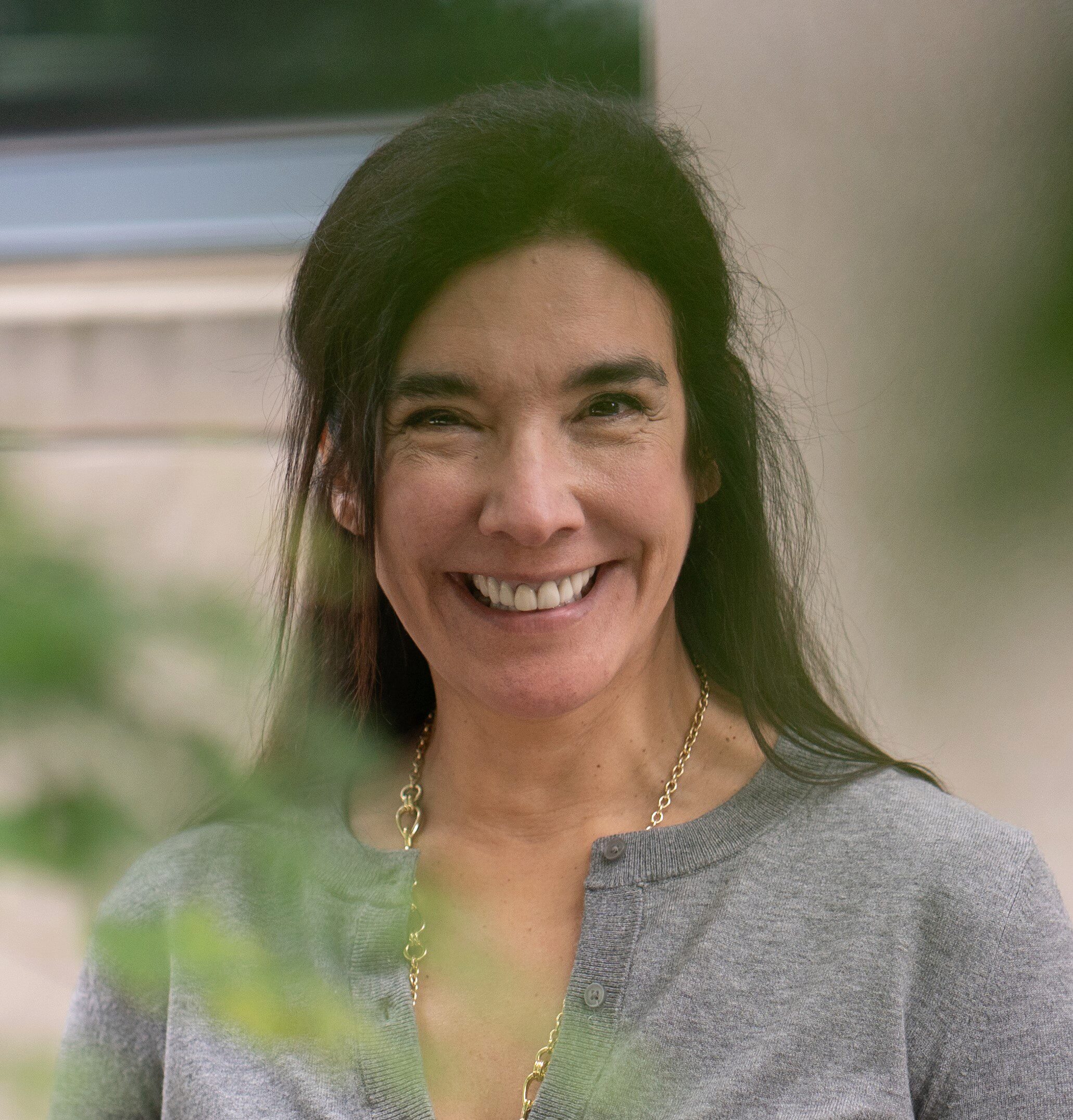
- Amy Gutmann Penn Integrates Knowledge University Professor
- Professor of Psychology
- Professor of Communication
- Professor of Health Care Management
- Director of the Communication Science Division at the Annenberg Public Policy Center
Contact Information
- Primary Email:
dalba@upenn.edu
Links: CV, Personal Website
Teaching
Current Courses
COMM4500 - Research Course In Social Psychology: How To Change Beliefs, Attitudes, And Behaviors
This seminar explores how and why people change their minds and actions. Are belief change and attitude change the same process? Why do some behaviors resist influence while others shift easily? Through readings and discussions, students will investigate theoretical and empirical distinctions among these constructs, analyze interventions aimed at modifying each, and design their own studies to test new approaches. Readings will cover foundational and recent research on persuasion, misinformation, and behavioral interventions. By the end of the course, students will be equipped to evaluate and develop evidence-based strategies for behavior change in applied domains such as health, policy, and communication. In summary, this progression (belief → attitude → behavior → integration → design → execution) mirrors how social psychologists move from theoretical insights to practical applications. The class will combine advanced readings, discussion, and applied activities aligned with the course’s learning objectives. You will design and conduct an experiment testing novel methods of changing beliefs, attitudes, or behaviors, program the study using appropriate software, and apply your prior knowledge of statistical analysis. The experiment will be designed, implemented, and analyzed collaboratively in small groups, while each student will write an individual research paper reporting and interpreting the results. This format balances targeted readings with active learning, offering a full research experience that complements rather than duplicates traditional seminar coursework. The readings are selective, allowing you to focus deeply on core works while dedicating substantial time to designing, conducting, and analyzing your own research. This seminar is ideal for students preparing for graduate study or research careers in social psychology, communication, or behavioral science. It will also benefit students pursuing careers that require analyzing evidence and understanding human behavior, including consulting, law, public policy, or medicine.
COMM4500401
PSYC4500 - Research Course In Social Psychology: How To Change Beliefs, Attitudes, And Behaviors
This seminar explores how and why people change their minds and actions. Are belief change and attitude change the same process? Why do some behaviors resist influence while others shift easily? Through readings and discussions, students will investigate theoretical and empirical distinctions among these constructs, analyze interventions aimed at modifying each, and design their own studies to test new approaches. Readings will cover foundational and recent research on persuasion, misinformation, and behavioral interventions. By the end of the course, students will be equipped to evaluate and develop evidence-based strategies for behavior change in applied domains such as health, policy, and communication. In summary, this progression (belief → attitude → behavior → integration → design → execution) mirrors how social psychologists move from theoretical insights to practical applications. The class will combine advanced readings, discussion, and applied activities aligned with the course’s learning objectives. You will design and conduct an experiment testing novel methods of changing beliefs, attitudes, or behaviors, program the study using appropriate software, and apply your prior knowledge of statistical analysis. The experiment will be designed, implemented, and analyzed collaboratively in small groups, while each student will write an individual research paper reporting and interpreting the results. This format balances targeted readings with active learning, offering a full research experience that complements rather than duplicates traditional seminar coursework. The readings are selective, allowing you to focus deeply on core works while dedicating substantial time to designing, conducting, and analyzing your own research. This seminar is ideal for students preparing for graduate study or research careers in social psychology, communication, or behavioral science. It will also benefit students pursuing careers that require analyzing evidence and understanding human behavior, including consulting, law, public policy, or medicine.
PSYC4500401
Past Courses
COMM4500 - Beliefs, Attitudes, Behavior
This seminar explores how and why people change their minds and actions. Are belief change and attitude change the same process? Why do some behaviors resist influence while others shift easily? Through readings and discussions, students will investigate theoretical and empirical distinctions among these constructs, analyze interventions aimed at modifying each, and design their own studies to test new approaches. Readings will cover foundational and recent research on persuasion, misinformation, and behavioral interventions. By the end of the course, students will be equipped to evaluate and develop evidence-based strategies for behavior change in applied domains such as health, policy, and communication. In summary, this progression (belief → attitude → behavior → integration → design → execution) mirrors how social psychologists move from theoretical insights to practical applications. The class will combine advanced readings, discussion, and applied activities aligned with the course’s learning objectives. You will design and conduct an experiment testing novel methods of changing beliefs, attitudes, or behaviors, program the study using appropriate software, and apply your prior knowledge of statistical analysis. The experiment will be designed, implemented, and analyzed collaboratively in small groups, while each student will write an individual research paper reporting and interpreting the results. This format balances targeted readings with active learning, offering a full research experience that complements rather than duplicates traditional seminar coursework. The readings are selective, allowing you to focus deeply on core works while dedicating substantial time to designing, conducting, and analyzing your own research. This seminar is ideal for students preparing for graduate study or research careers in social psychology, communication, or behavioral science. It will also benefit students pursuing careers that require analyzing evidence and understanding human behavior, including consulting, law, public policy, or medicine.
COMM4797 - Honors & Capstone Thesis
The senior thesis provides a capstone intellectual experience for Honors students and Communication and Public Service Program (ComPS) participants. Students conduct a primary research study on a communication-related issue over the course of two semesters. Students should consult with and arrange for a faculty supervisor no later than the summer before senior year. Students must also file a designated form and topic statement, approved and signed by the supervising faculty member, no later than the first day of class. Required of all students planning to enroll in COMM 4897 or COMM 4997 in the Spring. All Honors students must have a 3.5 cumulative GPA at the end of junior year for eligibility. See the Annenberg website for complete eligibility requirements.
COMM4997 - Senior Honors Thesis
Second semester of two semester thesis course. Completion of COMM 4797 with a grade of 3.3 or higher and a 3.5 cumulative GPA at the end of the Fall semester of senior year are required for enrollment. The Senior Honors Thesis provides a capstone intellectual experience for students who have demonstrated academic achievement of a superior level. Students complete the primary research project started during COMM 4797.
COMM5770 - Attitude & Behavior Prediction
This course surveys classic and contemporary theory and research in the area of attitude formation and change and examines the principles of social information processing that underlie attitudes. We cover some of the basic concepts of the psychology of attitudes, including attitude structure and measurement at both conscious and unconscious levels. After this introduction, we will review persuasion approaches, the role of affect and fear in communication, influences of past behavior, to finally turn to models that explain behavioral change and allow researchers and practitioners to design ways of modifying recipients' actions.
COMM9950 - Dissertation
Doctoral candidates, who have completed all course requirements and have an approved dissertation proposal, work on their dissertation under the guidance of their dissertation supervisor and other members of their dissertation committee.
PSYC4500 - Beliefs, Attitudes, Behavior
This seminar explores how and why people change their minds and actions. Are belief change and attitude change the same process? Why do some behaviors resist influence while others shift easily? Through readings and discussions, students will investigate theoretical and empirical distinctions among these constructs, analyze interventions aimed at modifying each, and design their own studies to test new approaches. Readings will cover foundational and recent research on persuasion, misinformation, and behavioral interventions. By the end of the course, students will be equipped to evaluate and develop evidence-based strategies for behavior change in applied domains such as health, policy, and communication. In summary, this progression (belief → attitude → behavior → integration → design → execution) mirrors how social psychologists move from theoretical insights to practical applications. The class will combine advanced readings, discussion, and applied activities aligned with the course’s learning objectives. You will design and conduct an experiment testing novel methods of changing beliefs, attitudes, or behaviors, program the study using appropriate software, and apply your prior knowledge of statistical analysis. The experiment will be designed, implemented, and analyzed collaboratively in small groups, while each student will write an individual research paper reporting and interpreting the results. This format balances targeted readings with active learning, offering a full research experience that complements rather than duplicates traditional seminar coursework. The readings are selective, allowing you to focus deeply on core works while dedicating substantial time to designing, conducting, and analyzing your own research. This seminar is ideal for students preparing for graduate study or research careers in social psychology, communication, or behavioral science. It will also benefit students pursuing careers that require analyzing evidence and understanding human behavior, including consulting, law, public policy, or medicine.
PSYC4998 - Mentored Research
Mentored research involving data collection. Students do independent empirical work under the supervision of a faculty member, leading to a written paper. Normally taken in the junior or senior year.
PSYC4999 - Honors Mentored Research
The Honors Program has been developed to recognize excellence in psychology among Penn undergraduates and to enhance skills related to psychological research. The 4998 credit signifies an Honors Independent Study, completed as part of the Honors Program. The honors program involves: (a) completing a year-long empirical research project in your senior year under the supervision of a faculty member (for a letter grade). This earns 2 cu's. (b) completing a second term of statistics (for a letter grade) before graduation. (c) participating in the year-long Senior Honors seminar (for a letter grade). This seminar is designed especially for Psychology Honors majors; this receives a total of 1 cu. (d) participating in the Undergraduate Psychology Research Fair in the Spring semester, at which honors students present a poster and give a 15-minute talk about their research. (e) a total of 15 cu's in psychology is required. Students will be selected to be part of the Honors Program in the Spring of their junior year (see application process online)
PSYC6999 - Indiv Res for 1st Yr Grd
Individual Research for First-Year Graduate Students
PSYC9950 - Dissertation
Dissertation
PSYC9999 - Independent Study
Individual Study and Research
In the News
Knowledge @ Wharton
- Who Controls a Company’s Values After It Is Sold?, Knowledge @ Wharton - 10/09/2026
- How Lucky Strike Entertainment Is Betting on Screen-Free Experiences, Knowledge @ Wharton - 10/08/2026
- Why People Would Rather Give Nothing Than Too Little, Knowledge @ Wharton - 10/08/2026
- The Data Behind College Football’s New Era, Knowledge @ Wharton - 10/07/2026
- AI Safety Has Reached a Critical Point, Knowledge @ Wharton - 10/07/2026
- AI’s Impact on Financial Services, Knowledge @ Wharton - 10/05/2026
- The Hidden Cost of Competition in the Workplace, Knowledge @ Wharton - 10/02/2026
- The NHL Salary Cap Surge Is Changing Team Building, Knowledge @ Wharton - 09/30/2026
- The Surveillance Challenge Facing Prediction Markets, Knowledge @ Wharton - 09/30/2026
- Why Remote Work Isn’t Working, Knowledge @ Wharton - 09/29/2026
Activity
In the News
Who Controls a Company’s Values After It Is Sold?Maurice Schweitzer, Wharton professor of operations, information and decisions, examines the Ben & Jerry’s legal battle and the challenges of preserving a company’s social mission under new ownership.…Read More
Knowledge @ Wharton - 2026/10/9